
How to Activate a Retail Signal Ecosystem (and Turn Data into Decisions)
Every click, every abandoned purchase, every search with no result in your online store is sending valuable information. In e-commerce, around 70% of baskets are abandoned and billions are lost in sales every year, even though every abandonment is a direct signal of friction or unresolved interest.
The problem is not a lack of data: it is that most retailers have it scattered, with no connection between sources and no real capacity to act on them at the right moment. A study by the Retail Industry Leaders Association estimates that only 20% of retailers harness the potential of data analytics to make decisions, leaving billions in profits on the table every year.
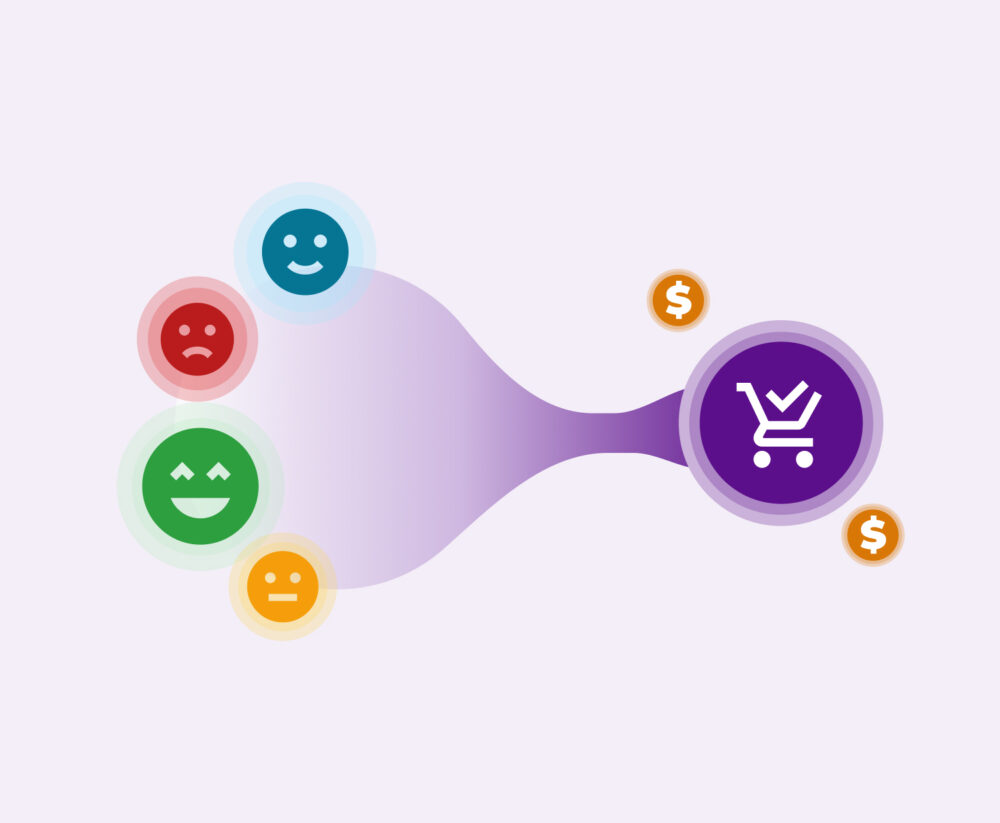
A signal ecosystem transforms those isolated data points into actionable information. Instead of accumulating metrics in dashboards that no one reviews, it is about interpreting behaviours in real time and responding with concrete actions. When a customer searches for an out-of-stock product, when they add three items to their basket but abandon the process, when they visit the same category for the fifth time: these are all signals that should trigger automatic and personalised responses.
The difference between a business that simply collects data and one that builds a signal ecosystem lies in the ability to close the loop: detect, interpret, and act. In this article, we explain how to do it without needing to invest in unnecessary technology or complicate your current operations.
Minimum Architecture to Activate Signals (Without Falling into “Martech for Martech’s Sake”)
When a retailer decides to “become more digital”, they usually start by buying tools. This is normal: it seems like the most tangible step. The risk is ending up with an expensive puzzle where each system does its part, but no one manages to orchestrate decisions.

To build a signal ecosystem, you don’t need to chase the perfect tool; you need a foundation that connects data capture, decisions, activation, and measurement.
Unified data and event capture
Data sources include the physical store (POS, traffic sensors, loyalty programmes), e-commerce, marketplaces, apps, email, or social media. Each one generates signals of behaviour, intent, purchase, and satisfaction that must be collected using consistent criteria. This does not require complex tools from day one. You can start with a well-configured tagging system or a lightweight CDP (Customer Data Platform) that centralises basic events such as product views, additions to the basket, purchases, and abandonments.
Real-time decision engine
This is where signals turn into actions. It can be as simple as automated rules within your email marketing platform or a recommendation system that responds to user behaviour while they browse. The important thing is that the decision is made in the moment, not three days later when the opportunity has already been lost.
Connected activation channels
Signals are useless if you cannot act on them. Your communication tools (email, SMS, push notifications), your website, your advertising campaigns, and your store teams must be connected to the central system to receive automatic instructions based on those signals.
Learning
Without measurement, the ecosystem becomes a factory of assumptions. The basic requirement is to have metrics for before and after, and whenever possible, controlled (A/B) tests. It’s not about measuring everything, but measuring what moves the business and the experience: cancellations, returns, delivery fulfilment, conversion, net margin, support contacts, and satisfaction.
The “martech for martech’s sake” trap appears when you add tools because they sound good or because the competition has them, without asking what specific problem they solve. An effective ecosystem is built from the bottom up.
First, you define which decisions you want to improve (for example, more precise promotions, fewer out-of-stock situations, or more relevant campaigns). Then, you identify the signals needed to support those decisions and review which systems already generate them. With this information, it is easier to select the necessary tools and avoid investments that only add complexity.
This minimum architecture has one goal: for the retailer to stop looking at the business in “parts” and start making connected decisions.
Case Studies: Thinking About Signals Changes Decisions
Theory sounds good until it is put into practice. The interesting thing is that, when you work with signals, very specific day-to-day decisions change. And they usually change fast.
Customer-oriented use cases
Imagine a person who enters your website from a specific city and searches for a popular product. In a traditional approach, the website shows the product, a price, and a generic delivery promise. With active signals, the promise adjusts to real capacity: availability by zone, logistics load, and recent real-time data. The result is not just “information”; it is trust. And trust reduces two things that cost a lot: cancellations and support contacts.

Examples of customer-oriented use cases include:
- Signal: Customer searches for an out-of-stock product.
- Traditional response: Nothing, or at best, a manual back-in-stock notification weeks later.
- Signal-based response: Automatically captures the email, suggests similar alternatives instantly, triggers a notification when the product is available, and offers a small incentive if they finally purchase.
- Signal: User abandons basket after seeing delivery costs.
- Traditional response: Generic abandoned basket email 24 hours later.
- Signal-based response: Immediate detection of the friction point, A/B testing of different free delivery thresholds for that customer profile, dynamic remarketing showing the product with a “delivery included” message.
- Signal: Frequent customer stops buying after three months of consistent activity.
- Traditional response: They enter an “inactive” segment after six months.
- Signal-based response: Early alert to the CRM team, activation of a personalised reactivation campaign with products related to their last purchases, and an exclusive discount before they are lost for good.
Product and inventory-oriented use cases
Signals are not limited to the customer; they also describe the life of the product. Exposure in categories, click-through rates, conversions, reviews, returns, and turnover by store tell different stories about the health of the catalogue. A well-designed signal ecosystem combines this data to support decisions on assortment, pricing, and replenishment.

Examples of product and inventory-oriented use cases include:
- Signal: Sudden spike in searches for a specific product without conversion.
- Traditional response: Detected in the monthly report, when it is already too late.
- Signal-based response: Automatic alert to the product team, immediate review of price, availability, or description, and adjustment of the visual merchandising strategy to highlight it better.
- Signal: Critical stock levels of a high-turnover product.
- Traditional response: It runs out, sales are lost, and it is replenished when the next order arrives.
- Signal-based response: Automatic notification to procurement to accelerate replenishment, activation of substitute products in recommendations, and temporary adjustment of campaigns to stop promoting something you cannot supply.
- Signal: Product with a high return rate.
- Traditional response: Analysed quarterly in an operations meeting.
- Signal-based response: Immediate alert when the threshold is exceeded, review of descriptions and photographs, adjustment of the size guide, and inclusion of specific warnings on the product page to reduce incorrect expectations.
Marketing and Retail Media use cases
Marketing and Retail Media benefit especially from a signal ecosystem. Retail Media Networks and campaigns on external platforms perform better when nourished by first-party data: purchase histories, category-based segmentation, and reactions to previous promotions. These signals allow for more precise segmentation and reduce wasted impressions. Furthermore, combining signals from different channels facilitates a more realistic measurement of performance.

Examples of marketing and Retail Media use cases include:
- Signal: User interacts with content about a category but does not convert.
- Traditional response: Generic retargeting with a 10% discount.
- Signal-based response: Automated series of educational content about that category, product comparisons, real use cases, and a personalised offer after providing relevant information.
- Signal: Traffic spike from social media without conversion.
- Traditional response: Reach is celebrated; the lack of sales is ignored.
- Signal-based response: Automatic analysis of the navigation flow of those users, identification of abandonment points, immediate adjustment of landing pages, and creation of specific campaigns for that audience with tailored messaging.
- Signal: Sponsor brand on your marketplace has low performance.
- Traditional response: Renewal or cancellation based on the annual contract.
- Signal-based response: Dashboard shared in real time with the brand, automatic optimisation suggestions, testing of different ad formats, and dynamic budget adjustment based on performance.
How to Start Building Your Own Signal Ecosystem
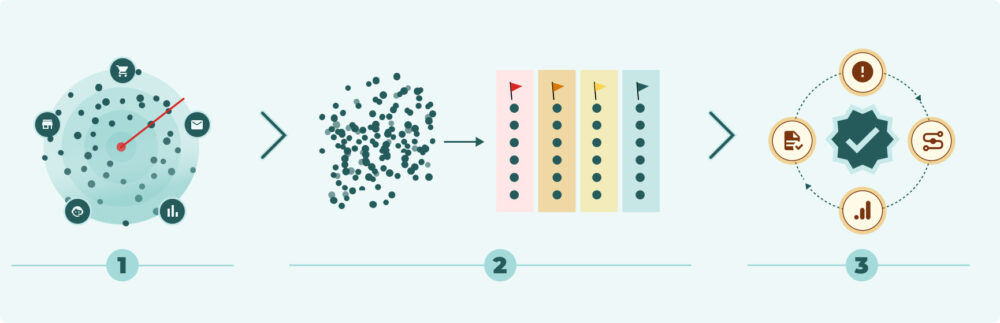
Starting well is usually more important than starting big. A realistic plan can be summarised in 3 steps, with one clear idea: choose a few signals, connect them to a few decisions, and demonstrate impact.
Step 1 – Mapping your current signals
The first step consists of inventorying all available data sources: point-of-sale systems, e-commerce, marketplaces, loyalty programmes, CRM, customer service, campaign tools, logistics platforms, and product management systems. It is advisable to document what type of signals each one generates, how often, in what format, and who is responsible for them.
This exercise often reveals duplications, gaps, and disconnections between teams and systems. It also shows which decisions are currently being made without all the relevant information. With this overview, it is possible to prioritise: not all signals have the same impact on the business, so it is useful to distinguish between those that are “essential” for improving key decisions and those that can wait.
Step 2 – Unify, clean, and prioritise
Once the signals are mapped, it’s time to unify them. It is not enough to simply dump them into a common repository. You must resolve data quality issues, different identifiers for the same customer or product, and inconsistent definitions across departments. A good practice is to work with data models that clearly define what a customer is, what a transaction is, what a product reference is, and how they relate.
During this phase, it is best to focus on a few use cases with a direct impact on revenue, margins, or customer experience, rather than trying to cover everything. Examples include segmenting high-value customers, detecting products with high intent and low conversion, and inventory planning for top sellers. The priority should be the ability to activate these signals in real processes and measure their effect.
Step 3 – Activate and close the loop
This is where signals turn into tangible actions. Define what should happen automatically when each signal is detected. Start with simple rules and add complexity as you learn.
Connect your activation channels. If you detect an abandoned basket, the system should automatically send a personalised email. If a VIP customer hasn’t purchased in 60 days, your support team should receive an alert.
Close the loop by measuring the impact of each action. Create simple dashboards that show for each signal: how many times it was activated, what action was taken, and what result was obtained. This allows you to iterate quickly and improve the effectiveness of your system.
Document everything. The rules you define, the integrations you create, the lessons you learn. A signal ecosystem grows over time, and you need anyone on the team to understand how it works without depending on a single person.
A System that Learns: The True Value of a Signal Ecosystem
Building a retail signal ecosystem is not about accumulating data or adding tools. It is about connecting key signals with decisions that matter: what you sell, how you promise it, how you deliver it, how you communicate it, and how you improve it.
When this approach is activated, three clear benefits emerge. The first is hyper-personalisation: not just “putting the customer’s name in an email”, but adjusting recommendations, messages, and offers to their intent and what you can actually fulfil (including stock and delivery). Operational agility is the second benefit, because marketing, e-commerce, stores, and logistics stop pulling in different directions and start making decisions with the same business snapshot. The third is the reduction of friction: fewer broken promises, fewer lost baskets due to avoidable issues, fewer repeated returns due to lack of information, and less support saturation.
If your data is currently split across teams and systems today, the first step is not a massive project. It is an intelligent selection: mapping signals, choosing those with the most impact, unifying them with clear definitions, and activating them in measurable use cases. When that cycle starts to work, the retailer gains something very difficult to copy: the ability to learn faster than the rest and to turn market events into useful decisions every single day.