
From the “Benito Bowl” to the Shelf: Merchandising, Fashion, and Retail Opportunities after the Super Bowl
TL;DR
Bad Bunny’s performance at Super Bowl LX captured much of the event’s attention, benefiting various brands. Limited releases and merchandising linked to the show caused searches and sales to skyrocket. The key for retail lies in planning collections and campaigns aligned with high-impact cultural moments.
Bad Bunny’s show at Super Bowl LX captured the attention of 124.9 million live viewers and generated 4 billion views on social media during the 24 hours following the event. This explosion of interest did not stop at entertainment: it quickly moved into the world of retail, where brands like Zara and Adidas saw their products become unexpected protagonists.
In this article, we explore how a performance lasting barely 13 minutes transformed the retail landscape, from fashion to merchandising, and what practical lessons retail professionals can apply to replicate these results in future events.
The “Benito Bowl” as a Value Machine for Brands and Retailers
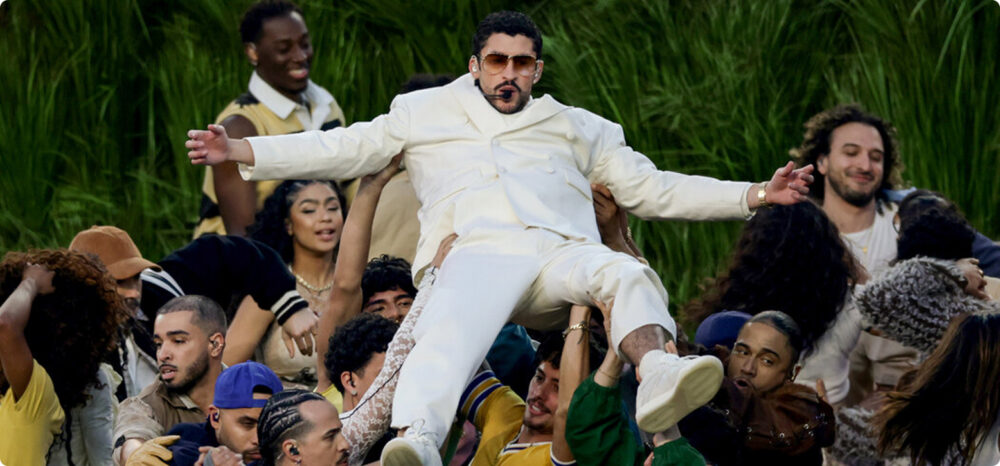
When Bad Bunny took to the halftime stage at Super Bowl LX, he didn’t just offer a musical performance lasting 13 minutes and 41 seconds: he ignited a machine. It was an economic phenomenon measurable in conversation, searches, and sales.
According to media impact analytics estimates, the artist accounted for 38.81% of the total Media Impact Value (MIV – Launchmetrics) of the event, generating around 170 million dollars in media value. In practical terms, this means that almost 4 out of every 10 digital interactions related to the Super Bowl revolved around his performance.
This data has a clear interpretation for any retailer: consumer attention behaves like a scarce resource that is radically redistributed during major cultural events. When that focus is concentrated on a specific figure, everything surrounding them receives a “knock-on effect”.
Brands that appeared on stage, even indirectly, obtained exposure comparable to a traditional 30-second advert… without paying the cost of the advertising space. In today’s retail ecosystem, where advertising saturation makes acquisition more expensive, associating with cultural moments becomes a high-performance strategic alternative.
The Super Bowl has always been a global showcase. But this year’s halftime show served as a practical demonstration of something more relevant to commerce: pop culture is capable of activating demand faster than any campaign planned in isolation.
Fashion in Prime Time: Zara and Adidas at the Centre of the Game
Zara: When Fast Fashion Takes Up Luxury Space
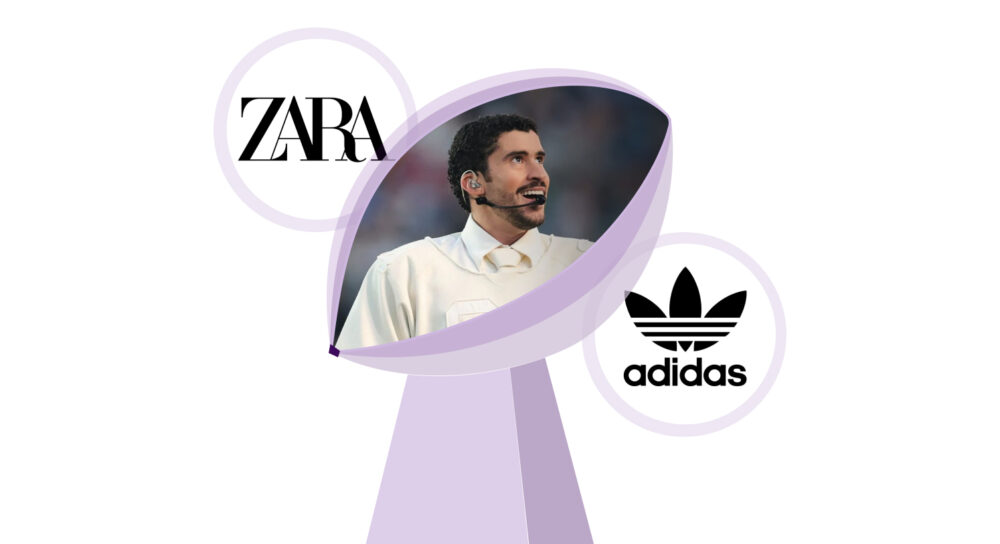
Bad Bunny’s decision to wear a full Zara outfit during his performance (collared shirt, tie, sports-inspired jumper, and cream-toned chinos, with the “Ocasio 64” detail embroidered in tribute to his uncle) did not go unnoticed. Zara did not only outfit the lead artist but also the 50 dancers, the 12 band musicians, and the 40 members of the orchestra, marking its historic debut in a Super Bowl halftime show.
This fact is particularly significant because the Super Bowl has historically been the territory of premium labels or exclusive collaborations. On this occasion, a mass-market retailer occupied the aspirational space.
The result demonstrates a structural shift in fashion consumption:
- Cultural legitimacy no longer depends solely on price.
- Context can elevate the perception of value.
- The consumer interprets the product through the moment.
An extreme example illustrates this well: staff t-shirts given by Inditex to its employees as corporate gifts appeared in online resale reaching prices close to 35,000 dollars.
This case illustrates the power of rapid production in fast fashion. Zara, with its model of proximity and immediate response, integrated cultural elements in record time, elevating accessible garments to collectible status. For other retailers, the lesson lies in preparing limited editions that capture the essence of global events: it is not just about selling clothes, but about associating the brand with a cultural moment that generates immediate desire and controlled resale.
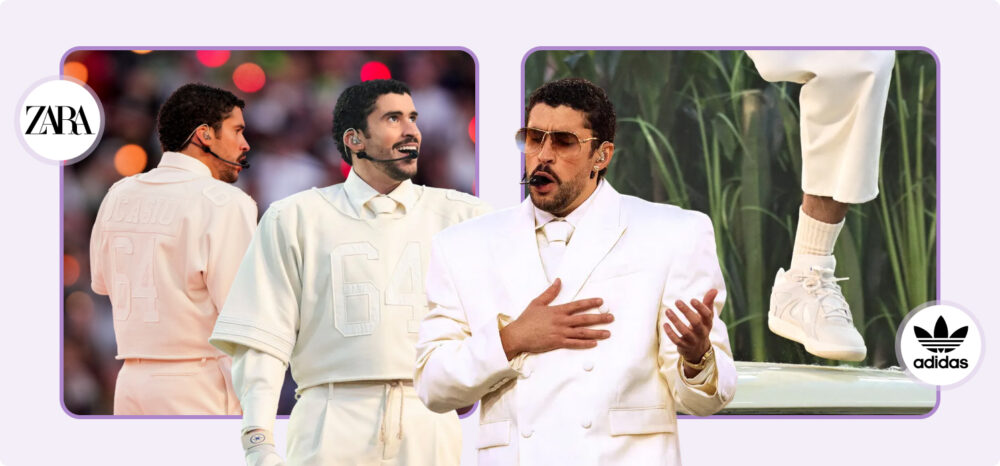
Adidas and the Choreographed Drop of the BadBo 1.0
Adidas took its collaboration with Bad Bunny, which began in 2021 with reworks of classic models like the Gazelle and Forum Low, to a new level with the launch of the BadBo 1.0, his first signature trainer. The brown colourway, limited to 1,994 pairs in reference to the artist’s birth year, sold out on 2nd February at a retail price of 160 dollars, but its resale reached an average of 795 dollars — a markup of 397% — on secondary platforms.
During the show, Bad Bunny presented the white “Resilience” colourway, which also sold out in minutes with resales at 271 dollars (+69% markup), while the dancers reinforced the brand’s presence with Sambas, Ballerinas, and Superstars in every televised shot.
Searches for Adidas experienced a 20% jump immediately after the performance, according to consumer trend data. This commercial choreography — pre-show drop to generate hype, live debut to accelerate desire, and post-event launch to capture demand — resulted in impeccable turnover in both physical stores and e-commerce.
The relevant element was not the product itself (the market is saturated with collaborative trainers) but the exact synchronisation with the moment of maximum televised attention of the year. Here lies one of the most important lessons for retail: a launch out of context competes against thousands of stimuli; within a cultural event, it competes against none.
Merchandising, Searches, and Sales: Retail as a “Reflection” of the Show
A Merchandising Market that Lives off Peaks
The merchandising associated with Latin music moves around 6.8 billion dollars globally, but its behaviour does not respond to stable demand. It works in waves of attention, and Bad Bunny’s performance at Super Bowl LX proved this clearly once again.
In the first 24 hours after the show, searches related to merchandising grew by 53%. During the following 72 hours, conversion skyrocketed: sales of products linked to the artist and the NFL universe increased by between 340% and 580%.
This pattern reveals something important: the consumer does not buy solely to own a product, but to preserve the experience. The t-shirt, flag, or accessory acts as a tangible extension of a collectively shared moment. The event happens in the stadium or on the screen, but its continuity materialises in retail.
That is why the channel (physical or digital) ceases to be a transaction point and becomes a space for cultural prolongation. The peak of conversation transforms into traffic, and traffic into sales, provided the product is available at the right time.
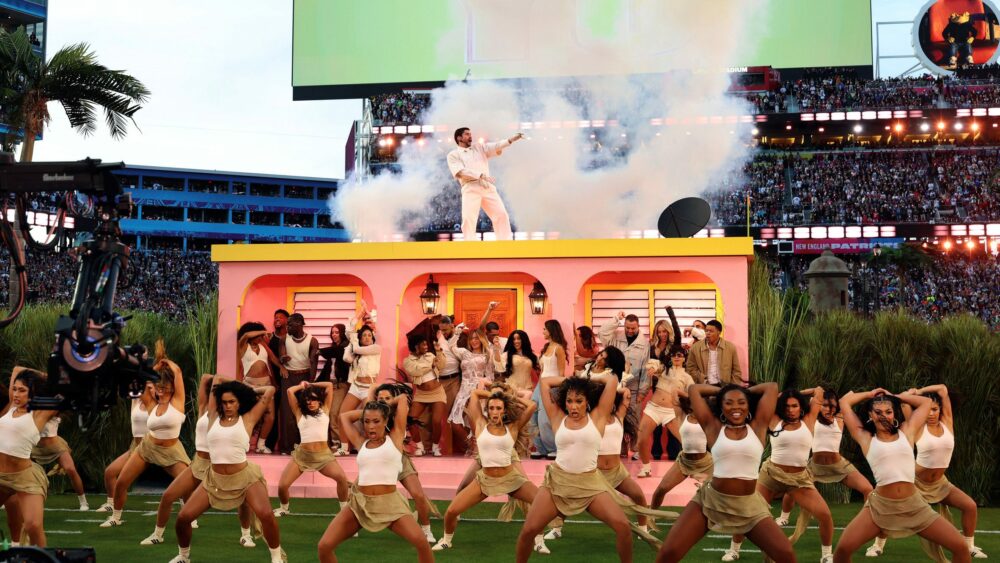
Source: Bad Bunny’s Super Bowl stage illustrates “surreal journey” through Puerto Rico – February 2026
Synchronising Physical and Digital Catalogues
The official collections linked to the show did not appear by chance. They were activated weeks before through pre-sales, staggered launches, and coordinated availability between e-commerce and physical stores. Data from streams and searches served as precise predictors: peaks in Spotify playlists indicated real-time stock adjustments, integrating accessible tools like Google Trends to optimise hybrid assortments.
The retailers who prepared their assortment in advance, integrating references aligned with the aesthetic of the show or the cultural context, captured the primary demand. Furthermore, they did so with better margins, because they sold based on relevance and not through discounts. In contrast, those who reacted after the event only accessed the final phase of the cycle: residual demand.
The difference between both behaviours was not in the product or the price, but in the timing. In massive cultural events, the right stock at the wrong time has practically the same value as having no stock.
Commercial Opportunities and Retail Tactics Left by the “Benito Bowl”
The impact of the show leaves several operational lessons for retail. Below is a practical summary applicable to retailers of any size:
1. Planning with Cultural Calendar Logic
Commercial planning cannot depend solely on traditional seasons. It must integrate relevant events from the cultural calendar into purchasing and campaigns. Events like the Super Bowl concentrate global attention for a few days but generate purchase intent even before they occur. Integrating them into the buying cycle allows for the anticipation of very specific demand peaks, usually between 3 and 5 days around the event.
2. Designing Capsule Collections and Exclusive Collaborations
Another implication is the real utility of capsule collections. It is not just about launching themed products, but about creating limited units linked to a recognisable narrative. When the consumer perceives legitimate scarcity and narrative coherence, the perceived value increases and collectibility appears, even in mass categories.
3. Coordinating Online and Physical Store Drops
It is also key to synchronise availability with moments of attention. The pre-show, the halftime break, and the subsequent hours do not show the same purchasing behaviour, but they are all part of the same cycle. Mechanics such as pre-orders, waiting lists, or priority access for recurring customers help convert interest into sales without depending on aggressive promotions.
4. Adjusting Advertising Spend to Specific Windows
Advertising spend should follow the same temporal logic. Concentrating activation in the days leading up and in the 24–72 hours following takes advantage of the maximum level of organic attention, which reduces the acquisition cost compared to campaigns without a cultural context.
5. Measuring Beyond ROAS
Finally, performance cannot be evaluated only with direct attribution metrics. Indicators such as share of voice or the increase in store traffic allow for a better understanding of the full effect of associating with major media moments. Without this broader vision, part of the return remains outside the analysis and the real profitability of the strategy is underestimated.
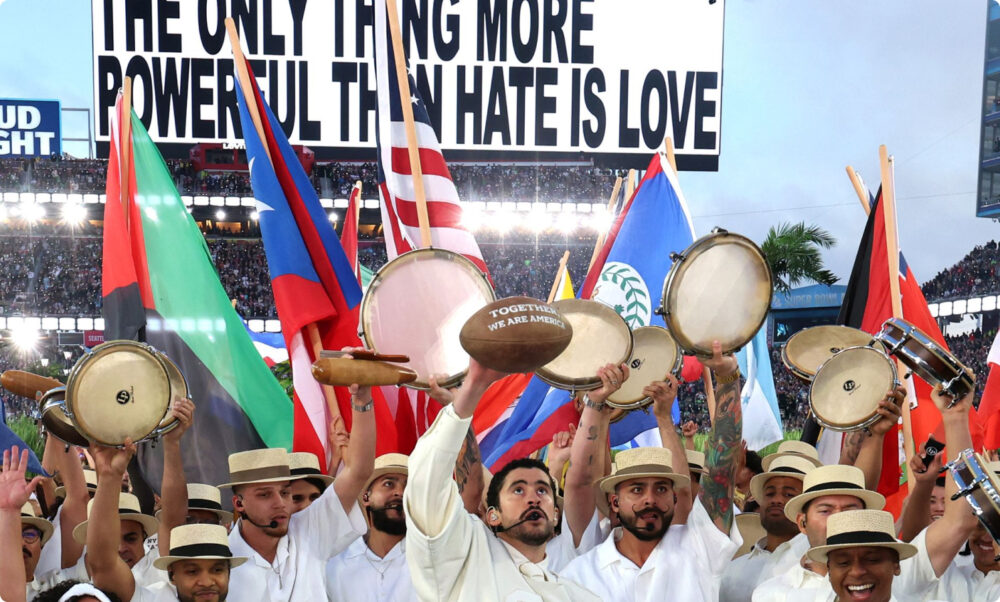
Source: Bad Bunny’s Halftime Show Was a Love Letter to Latin Memory – February 2026
When Culture Sets the Pace of Retail
Bad Bunny’s performance at Super Bowl LX exceeded the usual impact of a major televised show. It served to observe, in real-time, how a cultural moment can activate conversations, searches, and purchases immediately and in a coordinated manner.
The brands present around the show accumulated exposure and became integrated into the meaning of the event. It is this nuance that transforms an ordinary product into an object of desire or even a collectible, because the consumer does not perceive only what they buy, but the context to which it belongs.
For retail, the implication is direct. Assortment, price, or promotion remain relevant, but their effectiveness increasingly depends on the fit with the right cultural moment. Ultimately, understanding when the consumer is emotionally involved is as important as knowing what they want to buy. When both factors coincide, demand appears with an intensity that is difficult to replicate through purely promotional means.