
Stories from the Digital Shelf: How to Detect Weak Signals that Anticipate Market Changes
TL;DR
The Digital Shelf allows for the identification of weak signals that anticipate market changes before they impact sales. Analysing searches, assortment, prices and competitive movements helps in making decisions with an advantage and reducing strategic surprises.
The Digital Shelf as the Brand’s “Periscope”
A submarine navigates blindly until it raises its periscope. Only then can it see what is happening on the surface: if there is a storm, if a ship is approaching, or if the horizon is clear. Brands selling through digital channels have a similar instrument at their disposal: the Digital Shelf.
The Digital Shelf is the set of touchpoints where a product appears — or ceases to appear — in an online sales environment: product pages, search positions, consumer ratings, competitor prices, stock availability. All of this is there, updated in real time, accessible to those who know how to look.

The problem is that most brands only use the Digital Shelf for reactive tasks: correcting an incorrect price, claiming an outdated image, or responding to a bad review. They treat it as a breakdown control panel, not as a source of strategic intelligence.
This article proposes doing exactly the opposite: using the Digital Shelf as an early detection system for market changes, through what is known in strategic analysis as weak signals.
What Do we Mean by “Weak Signals” on the Digital Shelf?
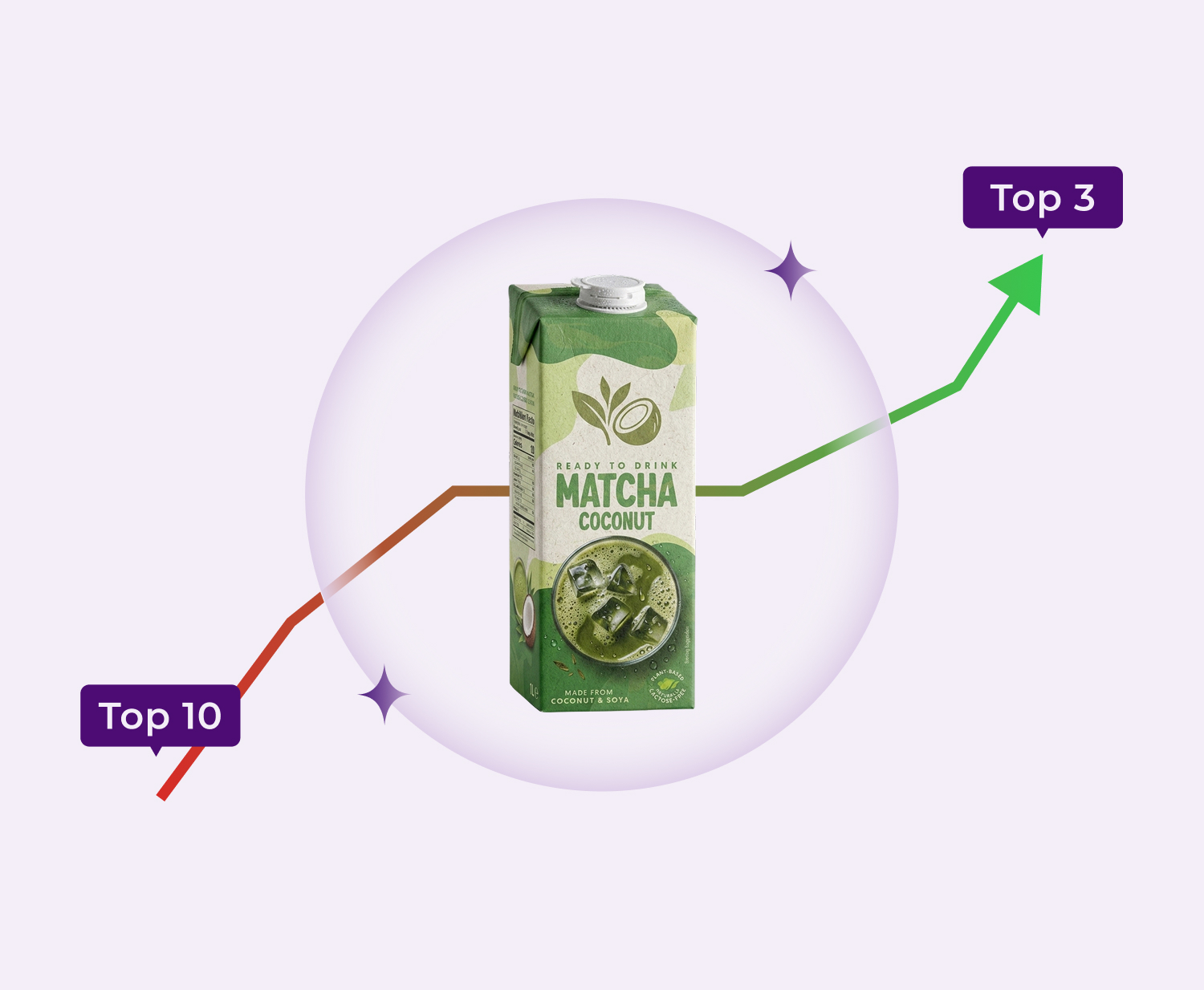
The concept of a weak signal comes from the field of strategic foresight. A weak signal is an incipient, barely visible and apparently minor indication that anticipates a significant change before that change becomes evident to the entire market.
On the Digital Shelf, a weak signal could be:
- A secondary category that begins to gain search volume consistently.
- An unknown competitor that systematically appears in the top search results.
- A specific attribute (“no added sugar”, “concentrated”, “refillable”) that suddenly proliferates across product pages in the entire category.
- A gradual drop in reviews in a price segment that was previously stable.
At an analytical level, these signals have three characteristics:
- Low magnitude: They affect few products or a reduced volume of users.
- High recurrence: They are repeated across different retailers or categories.
- Low immediate interpretation: They do not explain the present, but they suggest the future.
None of these signals, on its own, justifies a strategic pivot. But when they are identified systematically, cross-referenced with other sources and their evolution is interpreted over time, they can anticipate changes in demand, assortment or competition weeks or months ahead of the rest of the market.
The difference between a weak signal and background noise is, precisely, the ability to observe methodically.
Why the Digital Shelf Is the Best Detector of Weak Signals
Each source of market information observes a different phase of customer behaviour:
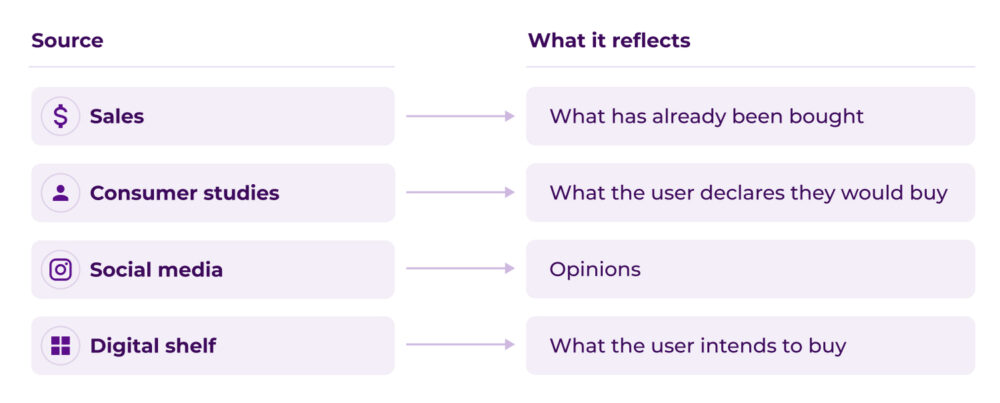
Behaviour always changes before volume does. The consumer explores first, adopts later and normalises at the end. Physical retail captures the final phase. The Digital Shelf captures the initial phase.
There are 4 specific reasons why the Digital Shelf offers advantages that other information sources do not:
- The first is speed. Digital Shelf data is updated continuously. A price change, a new entry in a retailer’s catalogue or a spike in negative reviews are visible within hours, not weeks. No traditional market study can compete with that cadence.
- The second is granularity. The Digital Shelf allows you to see what is happening at the reference, retailer, category and geographical market level simultaneously. This combination of levels is very difficult to obtain through other means.
- The third is that it reflects real behaviour. The searches consumers make, the products they buy, the attributes they mention in their reviews: all of this is observed behaviour, not declared. It is what people do, not what they say they would do in a survey.
- The fourth, and perhaps the most relevant in this context, is that the Digital Shelf captures competitors’ movements before those movements become public. A launch, a change in positioning or an aggressive pricing strategy manifests on the digital shelf before appearing in any press release or industry report.
That is why many market changes do not start with the consumer, but in the interaction between the consumer, the algorithm and the digital assortment.
Four Types of Weak Signals that Anticipate Market Changes
The weak signals that can be observed on the Digital Shelf are grouped into four large blocks: demand, assortment, pricing and competition.
1. Demand Signals
These are the first to appear because they reflect exploration. Demand signals indicate changes in what consumers search for, buy or value. On the Digital Shelf, they manifest in several ways:
- Search terms that gain position consistently.
- Changes in click-through and conversion rates per SKU.
- Attributes that begin to repeat in reviews.
- Adjacent categories that grow while the main category stagnates.
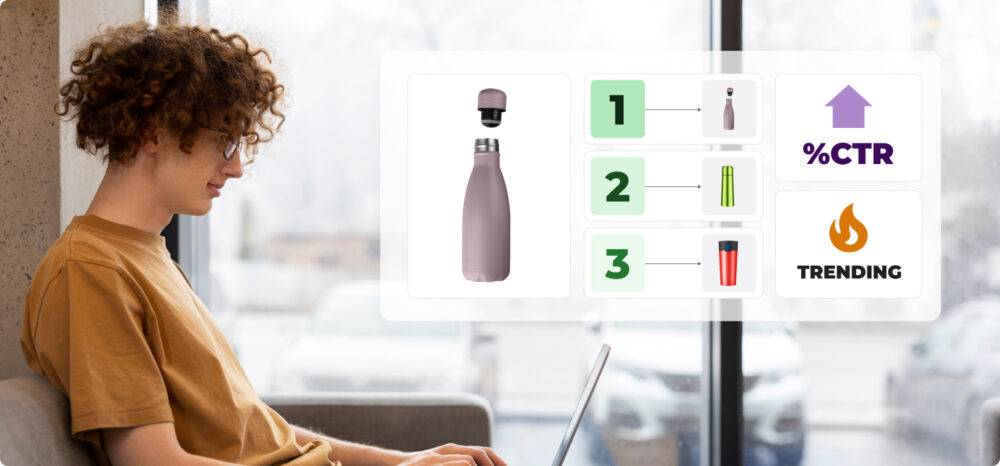
A common example: a snack brand detects that searches related to “protein” are growing in its category while those for “low calorie” are stabilising. Before that change reaches consumer panels, it is already visible in the channel’s search behaviour. Demand always starts in language, not in sales.
2. Assortment Signals
The assortment that retailers decide to include, maintain or withdraw from their platforms is another market thermometer. Retailers use the digital channel to test. Assortment signals are detected in:
- Appearance of new subcategories and expansion of niche formats.
- New SKUs gaining speed.
- Products with presence but no traction.
- Assortment gaps compared to the competition.

When several retailers begin to incorporate similar references simultaneously, or when a subcategory that didn’t exist before starts appearing in navigation menus, it is rarely accidental. Each of these movements tells a story. And it helps to adjust the portfolio by channel, prioritise references and detect opportunities for innovation or assortment rationalisation.
3. Pricing Signals
Price is the fastest strategic experiment in the market. Pricing signals relate to relative price position and its evolution. The following relevant changes can become signals of what is happening in the market through price:
- Deviations from the market average.
- Sequence of discounts and promotions.
- Price conflicts between channels.
- Concentration of products in new price ranges.
- Premiumisation of specific attributes.

When a category changes its price architecture, it is redefining its future positioning. Observing these signals helps to decide where to adjust prices, when to activate campaigns and how to protect margin without losing relevance.
4. Competitive Signals
The market first tolerates, then copies and finally integrates. Competitive signals show how other players in your category are moving. The movement of competitors on the Digital Shelf leaves very clear traces for those looking for them:
- New references launched.
- Changes in content on product pages.
- Variations in selling points.
- Appearance of new players in consolidated categories.
- Changes in digital share (share of search, share of shelf, share of voice).

These signals allow for the anticipation of competitor movements and the preparation of responses in assortment, communication, retail media investment or negotiation with retailers.
How to Build a System to Detect and Exploit these Signals
Detecting weak signals occasionally has little value. What generates a competitive advantage is having a systematic process that collects, interprets and turns them into decisions regularly.
Step 1 – Define Digital Shelf Metrics and KPIs
The first step is to decide what is going to be measured. Not everything that can be measured is relevant, and an excess of data is as paralysing as a lack of it. Fundamental Digital Shelf metrics are usually grouped into four blocks:
- Visibility: search position, share of search.
- Content: quality of listings, attribute compliance.
- Availability: stock, coverage by retailer.
- Reputation: review volume and score, temporal evolution.
To these metrics, you must add specific tracking of the competition: what references they have, where they appear, at what price and with what arguments.
Step 2 – Automate Data Capture and Monitoring
Without automated data capture, the cost of maintaining an updated view becomes unsustainable. Digital Shelf analytics solutions like Flipflow allow for the continuous collection of information from multiple retailers and marketplaces, standardising it and presenting it in dashboards.
Automation not only reduces manual effort but also improves coverage of categories, products and channels. The greater this coverage, the lower the risk of “blind spots” where weak signals occur unnoticed. Furthermore, Digital Shelf data can be cross-referenced with internal sales information to evaluate the real impact of each signal.
Step 3 – Turn Signals into Actionable Alerts
The next step consists of transforming variations in metrics into clear and prioritised alerts. Not all deviations require immediate action, so it is advisable to define business rules that take into account the weight of each SKU, the channel and the category.
Examples of useful alerts:
- Warnings when the availability of a key SKU falls below a threshold at a strategic retailer.
- Alerts for loss of position on priority keywords for several consecutive days.
- Notifications when a competitor reduces its price in a certain range across a set of comparable products.
- Signals of a rapid increase in negative reviews in a product family.
These alerts must reach the responsible teams (sales, marketing, revenue, supply chain) accompanied by sufficient context (what has happened, since when, and what response is expected from the responsible team) to decide what action to take.
Step 4 – Integrate these Signals into Business Decisions
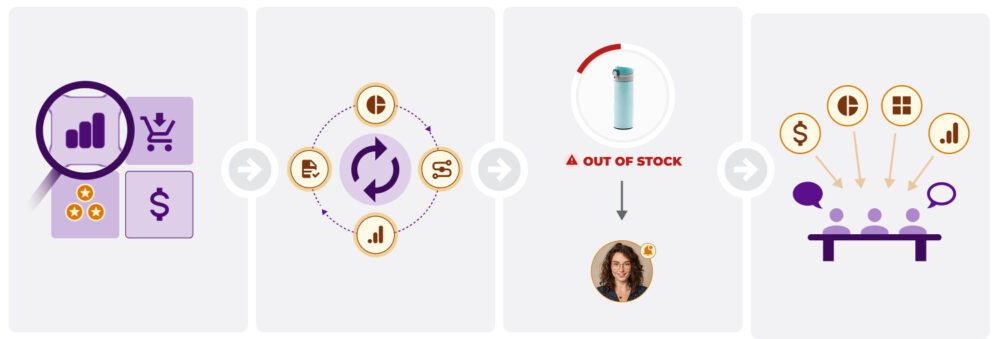
The final step, and the most difficult one, is cultural: ensuring that Digital Shelf signals reach the meetings where decisions are made. This implies that data is presented clearly and actionably, that there are individuals responsible for them, and that established processes exist to turn a signal into a specific action: a price adjustment, a change in product page content, a conversation with a retailer or an assortment review.
Case Studies: Stories from the Digital Shelf
To understand the value of these weak signals, it is useful to see how they can change the course of specific decisions:
The competitor nobody saw coming
A consolidated baby food brand began to lose search positions to a new brand with almost no sales history. Initially, the team attributed it to a technical problem. When they reviewed the data in more detail, they found that the new brand had systematically optimised its product pages with very specific attributes that parents were searching for but that the leading brand was not including in its content. The adjustment took months to make. Months that the competition took advantage of to consolidate their position.
The new model with 5-star reviews
A third case can be found in consumer electronics. A manufacturer detects, thanks to Digital Shelf analytics, that a new model from an emerging brand is starting to accumulate very positive reviews on a specific marketplace and gaining search ranking positions for terms associated with “value for money”. Although the absolute volume is still small, the pattern holds for several weeks. The company interprets this signal as a risk of disruption and decides to accelerate the launch of an intermediate range, reinforce comparative content and bet on bundles with added services. The early response allows them to defend their position before that new player reaches critical mass.
A brand that saw the format change coming
A household cleaning products company detected, over several months, that searches for concentrated formats were growing steadily across several retailers while their references in that segment had barely any visibility. The data reached the category team before any market study picked it up. This gave them time to negotiate space with retailers and prepare the launch of their own reference before the category was flooded with competitors.

In all these stories, the common element is that the signal appears first on the Digital Shelf, in the form of subtle changes in searches, reviews, prices, rankings or launches, and only later in business indicators.
The Digital Shelf as an Early Warning System
The brands that win in digital channels are not necessarily those with the best products or the highest budgets. Frequently, they are the ones that best read what is happening in the market before that market changes.
The Digital Shelf, well observed and well analysed, offers that capability. Weak signals are there: in the search terms that grow, in the competitors that move, in the attributes that proliferate, in the reviews that change tone. The challenge is not accessing that information — today it is more accessible than ever — but building the discipline and processes to interpret it regularly and act on it in time.
Because on the Digital Shelf, by the time a weak signal becomes an obvious trend, the window to act with an advantage has already closed.