
Walmart Accelerates its Digital Shelf Labels: This is How the In-Store Experience will Change in 2026
TL;DR
Walmart will roll out digital price tags across all its US stores by the end of 2026 to streamline pricing, reduce manual labour and improve operational efficiency. The technology enhances the omnichannel experience and in-store accuracy, but it also sparks debate about dynamic pricing and regulation.
Walmart will bring digital price tags to all its United States stores before the end of 2026. This move confirms the extent to which physical stores are incorporating technology to gain efficiency and precision in daily management. The company has been testing this system for some time, but is now expanding the rollout nationwide with a much greater scope.
In this article, we update the analysis we previously published on flipflow regarding digital shelf labels, because the news from Walmart goes a step further and makes this technology a benchmark for the entire retail sector.
What Walmart has Announced
Walmart will replace paper labels with digital labels across its entire network of US stores before the end of 2026. The company had previously announced that the technology would reach about 2,300 stores, but the new announcement expands the scope to cover all its establishments in the country.
According to official information, the goal is to improve the speed at which prices are updated, reduce manual labour and strengthen coordination between the store, inventory and online orders. In practical terms, this means less time spent replacing labels one by one. It also means more capacity to focus on higher-value tasks for the customer.
How Digital Shelf Labels Work
A system connected to pricing
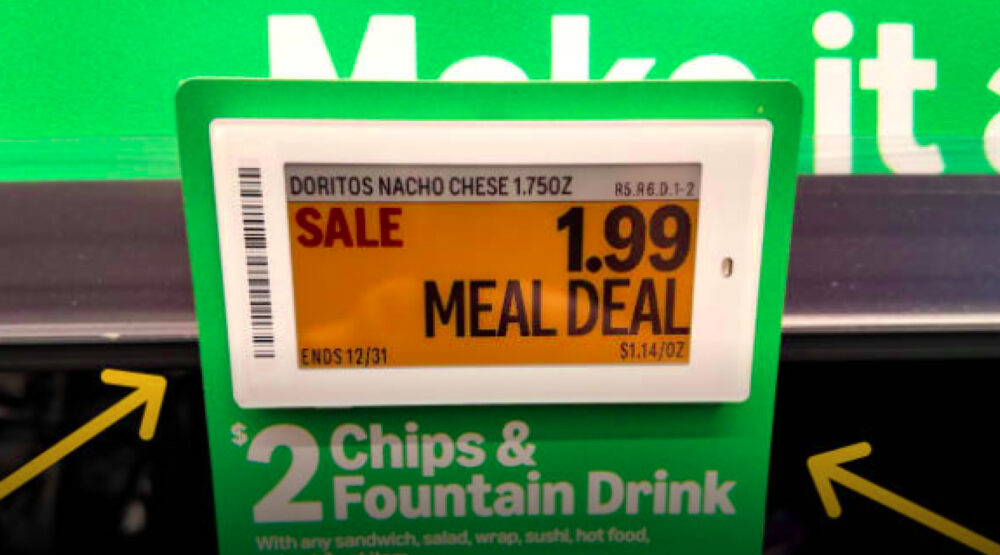
Digital shelf labels, also known as electronic shelf labels or digital shelf labels, are small electronic devices that replace traditional paper labels. They work by being connected to a central system, so that the price and other data can be updated remotely from an internal application.
Changes in minutes, not days
In Walmart’s case, the company explained that a price change that previously could take up to two days can now be done in just minutes. Additionally, these labels include extra features such as LED signals to make it easier to locate products or speed up the preparation of online orders.
What Changes in Operations
The main impact of the system is on store operations. Walmart manages more than 120,000 products on its shelves, and every week it carries out thousands of price updates for launches, sales or promotions. With digital labels, this work is centralised and becomes much more agile.
Amanda Bailey, an electronics team leader at a Walmart store in Ohio, estimates that digital labels have cut the time she previously spent on pricing tasks by 75%. This has allowed her to focus more on helping customers. She also noted that these labels are a revolutionary change for Walmart Spark delivery drivers. Thanks to them, they can see a flashing light and easily locate the product.
The technology also helps to reduce errors between the price shown on the shelf and the one that appears at the till or on digital channels. For the store team, this translates into fewer repetitive tasks and more time for restocking, customer service and order preparation.
Impact on the Shopping Experience
For the customer, the change may seem small at first glance, but it has clear effects on the shopping experience. Digital labels allow for more consistent prices and facilitate alignment between the physical store and online commerce, something that is increasingly important in omnichannel environments.
They can also help to improve clarity on the shelf, especially in large stores where product turnover and frequent promotions make it more complex to keep everything updated. In this sense, the technology not only modernises the point of sale but also reduces friction at key moments of the purchase.
Debate Over Dynamic Pricing
The advancement of these labels has raised concerns among consumers, media and regulators due to their potential link to dynamic pricing. The concern is understandable. If a label can be updated in real-time, it could also be used to modify prices very quickly based on demand or the time of day.
Some lawmakers view DSLs with caution, calling them a gateway to dynamic price hikes. Senator Ben Ray Luján (Democrat for New Mexico) has taken a leading legislative role not only for this type of labelling:
Another congresswoman, the Democratic Representative for Oregon, Val Hoyle, is promoting a bill in the House of Representatives. This would prohibit the use of digital labels on shelves. There have been no reported cases linking them to price increases yet. However, in her opinion, it is only a matter of time.
Walmart has insisted that this is not the purpose of its rollout. The company states that the system works in a closed environment, does not collect customer data and maintains the same price for all shoppers within the same store. Even so, the debate remains open and will continue to accompany the expansion of this technology in US retail.
What it Means for Retail
Walmart’s expansion confirms a broader trend. The digitisation of the shelf is no longer a pilot test, but an increasingly serious part of store modernisation. Other chains are also adopting electronic labels, albeit at different rates and with different objectives.
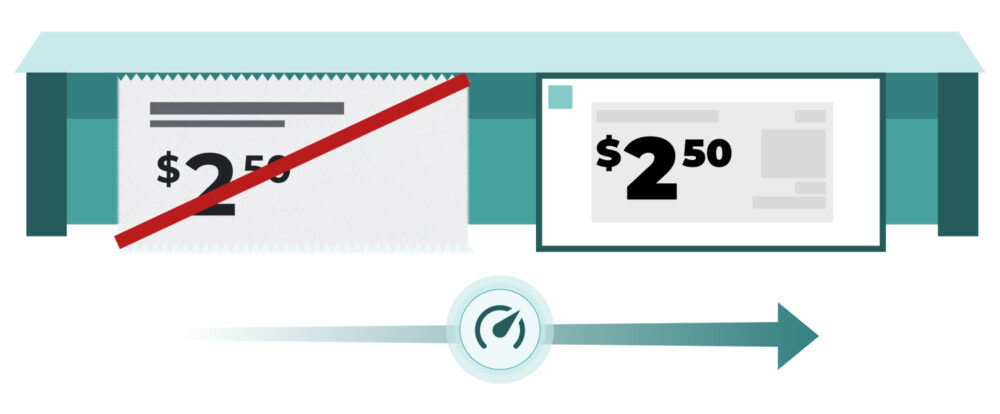
For the sector, the move has a clear strategic reading. Digital labels allow price, inventory and commercial execution to be connected more quickly, and open the door to more flexible operations in an environment where physical and digital experiences must function coherently. In this context, the Walmart case acts as an indicator of where large-scale retail may be headed in the coming years.
Why it Matters Now
Walmart is not just changing how it labels its products. It is accelerating a transformation that affects internal efficiency, the customer experience and the debate about the future of pricing in retail. In the coming months, the expansion of these labels will also serve to measure the extent to which technology improves operations without creating friction for the consumer.
The underlying message is clear: the physical store continues to play a central role, but it increasingly depends on digital systems to function with agility, consistency and scalability.