
Beyond Price: Why you Do Not Control your Digital Channel if you Ignore the Buy Box and Stock
TL;DR
Marketplace success depends on the synergy between price, stock, and Buy Box control. Only structural governance based on data and retail intelligence allows for the recovery of real channel control and the protection of brand value.
The digital commerce ecosystem has reached a level of complexity that exceeds traditional management tools. For any brand operating on marketplaces like Amazon, Miravia, or Walmart, visibility has become the most valuable and, at the same time, the most fragile asset. Many companies focus their efforts exclusively on adjusting their profit margins, assuming that success depends solely on a competitive figure. However, the reality of the data shows a different picture.
Real control of digital presence does not reside in a single variable. It is based on a three-pillar structure that interacts constantly: the awarding of the purchase button (Buy Box), immediate product availability, and price stability. Ignoring the relationship between these factors leads to a loss of brand authority and a drain on revenue that is difficult to recover. In this article, we will analyse why digital channel governance requires a cross-sectional view that goes beyond simple price monitoring.
The Illusion of Control in the Marketplace Environment
Many mass-market brands operate under a false sense of security provided by having a listed catalogue and a defined pricing strategy. This phenomenon is known as the illusion of control. A brand may set a Recommended Retail Price (RRP) and believe its authorised distributors respect it. But the marketplace environment is dynamic and often opaque.
The moment a product is published on an open platform, it is exposed to third-party intervention. Unauthorised sellers, parallel imports, or even errors in competitors’ repricing algorithms can alter the brand’s presentation to the end consumer in a matter of seconds. Manual control is insufficient given this speed of change.
The lack of structural governance causes companies to act reactively. They only detect the problem when sales drop or when a key distributor complains about unfair competition on the platform. By then, damage to organic positioning and consumer perception has already occurred. Real control involves anticipating these deviations by using retail intelligence that unifies data from all actors involved in the channel.
Buy Box: What it Is and Why it Matters More than it Seems
The Buy Box is the prominent box that appears on the Amazon product page with the direct purchase buttons. In practice, it is the point where conversion is concentrated: whoever controls that space for a product at any given time captures the vast majority of that listing’s sales. According to data from SnapSoft, approximately 82% of Amazon sales are made through this button.
The problem for brands is that this space is assigned dynamically by Amazon’s algorithm. And this means it can change hands at any time. To determine which seller gets the featured position, Amazon takes a wide variety of factors into account: price, product availability, shipping policies, and the seller’s rating in terms of customer service.
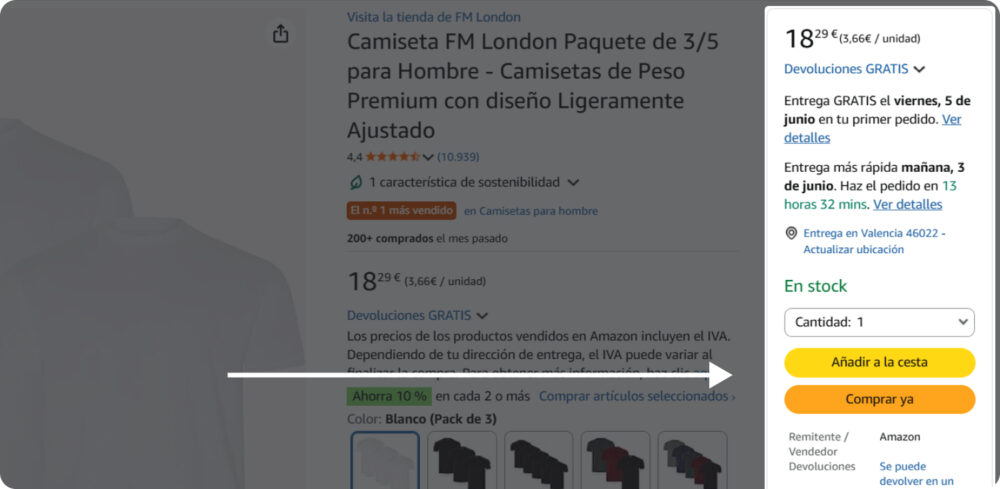
But there is a very common error in channel management: assuming the Buy Box is won or lost primarily on price. In the past, the algorithm could be fooled with a very low final price. Nowadays, many different aspects are considered in Buy Box allocation, so while price is an important factor, it is not the only criterion.
Losing this visibility space has immediate consequences. If an unauthorised seller (often referred to as a “hijacker“) takes the Buy Box, the brand loses the direct relationship with the customer and control over the shopping experience. Furthermore, the advertising budget is usually invalidated if the brand does not own the purchase button. This means marketing investment ends up benefiting a third party’s sales.
Availability: The Silent Factor that No One Monitors Well
If price is the most monitored variable, availability is probably the most neglected. And yet, it acts as a prerequisite for everything else: without real availability, neither the best price nor the best product page is of any use.
Availability is not simply equivalent to “having stock”. Availability ensures the product is listed, in stock, and accessible at the retailers where the consumer expects to find it. When any of these three elements fail, the impact is not limited to the digital channel. An online retailer’s stockout can drive demand towards a physical channel where the brand has less margin, or worse, towards a competitor who does have the product available.
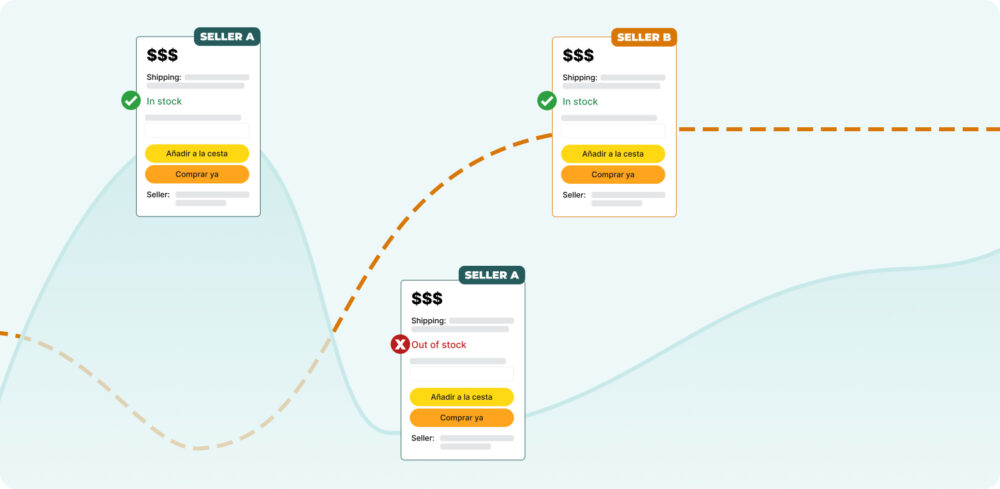
To compete for the Buy Box, sellers need sufficient stock to fulfil orders quickly, and the listing must show ‘in stock’ status. This means a brand with the best price and seller history can still lose the Buy Box if its inventory falls below a critical threshold at a specific time.
There is another less obvious effect: availability gaps open windows of opportunity for competitors and unauthorised sellers. When a brand’s product temporarily disappears from its main channel, competitors and resellers exploit that void to gain visibility and accumulate performance metrics. When the brand recovers stock, it finds that regaining the Buy Box takes time, because the algorithm has already given preference to whoever met the demand during the stockout.
Price: The Easiest Variable to Measure and the Most Difficult to Stabilise
Price is the most visible piece of data in the digital ecosystem, making it the primary focus of attention. However, its management is extremely complex due to total market transparency. Any price change at a major retailer can trigger a chain reaction across other sellers within minutes due to the use of dynamic pricing tools.
Price erosion occurs when sellers enter a downward spiral to win the Buy Box. This not only affects the immediate profit margin but also degrades the brand’s perceived value. If a high-end product is constantly sold below its market value, the consumer starts to doubt its exclusivity or quality.
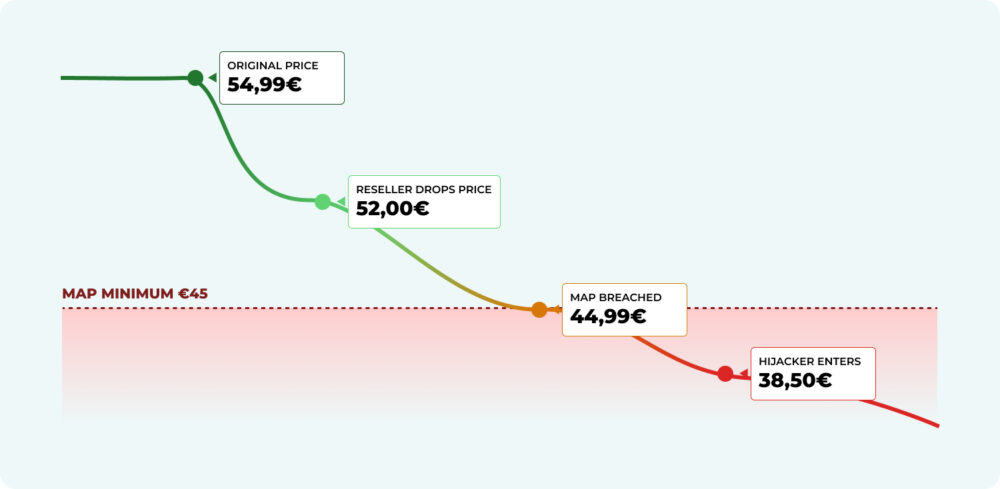
Furthermore, for brands operating with Minimum Advertised Price (MAP) agreements, the breach of these limits by unauthorised sellers creates serious conflicts with official distributors. A distributor who respects the rules feels penalised if the brand allows other resellers to cannibalise the market with unsustainable prices.
The problem is amplified in multi-country environments. Small price differences between markets create arbitrage opportunities. For example, a distributor who buys product in a cheaper market and resells it in another where the price is higher creates inconsistencies that distort the international distribution architecture.
The Triad in Action: How the Three Factors Interact
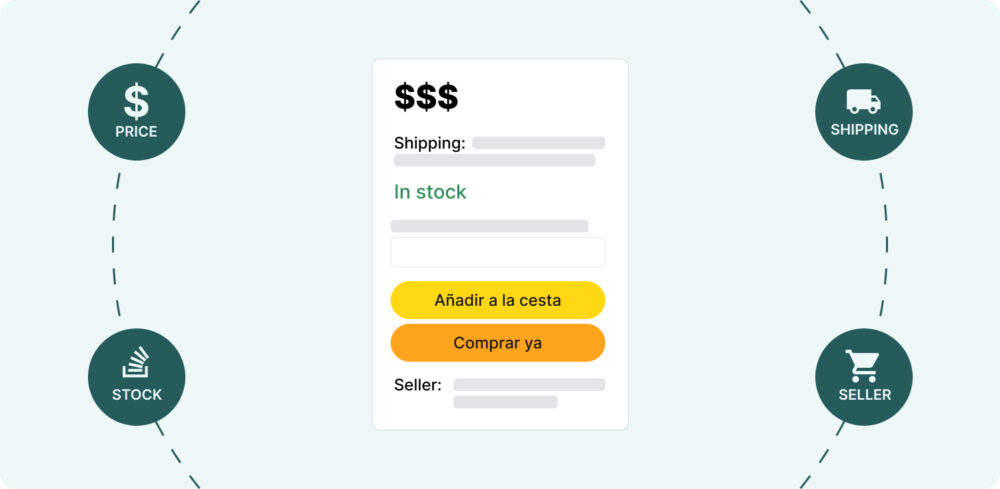
Buy Box, availability, and price are not three independent indicators managed separately. They are an interdependent system: the state of each conditions the behaviour of the other two.
Let’s see how this works in practice with three specific scenarios:
Scenario 1: competitive price, insufficient availability
A brand maintains the correct price within its MAP policy, but its inventory falls below the optimal threshold on a marketplace. The algorithm penalises availability, the brand loses the Buy Box to a third party that does have stock, and that seller —without needing to respect the MAP— starts to gain ground with a lower price.
Scenario 2: perfect availability, price above MAP
An authorised distributor has plenty of stock but decides to raise the price to capture a higher margin during a period of high demand. The consumer perceives the product as expensive compared to other references, migrates to alternatives, and the listing loses organic positions within the marketplace.
Scenario 3: Buy Box controlled by an unauthorised seller
An external reseller wins the Buy Box thanks to aggressive pricing and accumulated performance metrics. The brand loses the primary conversion point, but more worryingly, marketplaces allow any seller to compete for the sale, meaning that seller can operate for weeks before being identified if there is no continuous mapping system.
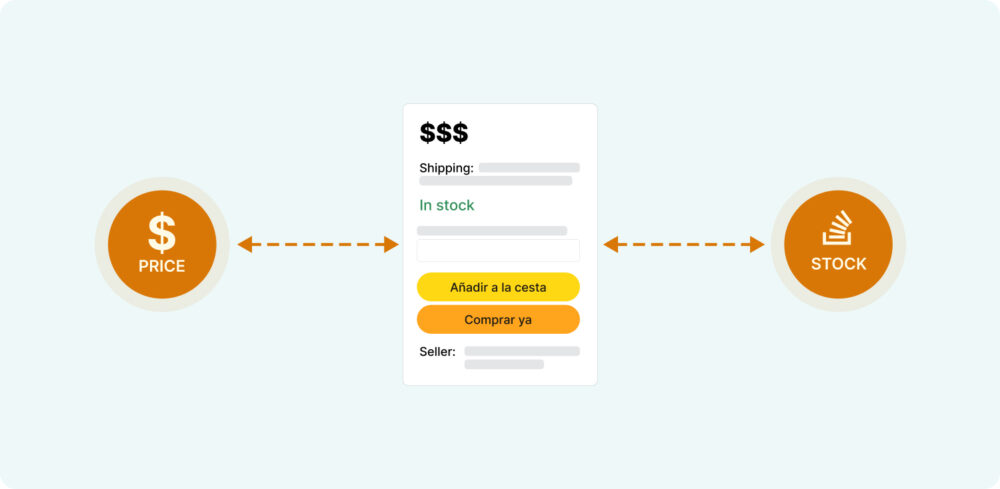
In all three cases, the underlying problem is the same: the absence of an integrated view of the three factors. A brand that only monitors price may detect Scenario 2, but not 1 or 3. One that only reviews the Buy Box can identify who has control, but without connecting it to why they won it or what correction is necessary.
In operational terms, this involves looking at the triad collectively. The brand needs to know which SKU is being offered by whom, at what price, with what availability, and under what purchase condition it appears on the platform. Without that integrated reading, decisions arrive late or are made based on an incomplete part of the problem.
From Reactive Price Monitoring to Structural Channel Governance
The traditional model of price control in the digital channel has a recognisable pattern. Someone manually detects an anomaly, escalates it internally, a verification process opens, and by the time action is taken, the damage has been accumulating for days. Teams check prices by hand, conflicts explode when there is already noise, and the pricing strategy becomes disconnected from actual execution. This model has direct and indirect costs. In large structures, a margin erosion of just 1% can represent millions in losses.
Structural channel governance starts from a different logic. Instead of reacting to deviations that have already occurred, it builds a continuous visibility system that allows action before problems escalate.
Tools like flipflow’s Pricing & Seller Control module transform data chaos into actionable information.
This methodology allows brands to:
- Identify unauthorised sellers: Precisely locate actors eroding brand value in any marketplace worldwide.
- Monitor price policy compliance: Verify in real-time whether official distributors respect established agreements and detect deviations before they become a trend.
- Analyse Buy Box health: Understand what percentage of the time the brand owns the buy button and what factors (price, stock, or logistics) are causing the loss of this space.
- Optimise distribution: Decide which channels and sellers deserve more support based on their behaviour and respect for the brand’s strategy.
- Prevent international channel conflicts: A governance system detects early signals of parallel resale, cross-border inconsistencies, and hotspots of conflict, generating evidence ready for negotiation and enforcement.
This is the difference between reactive price monitoring and structural governance. Monitoring serves to know what is happening; governing serves to intervene with context, prioritise risks, and protect margin and brand positioning.
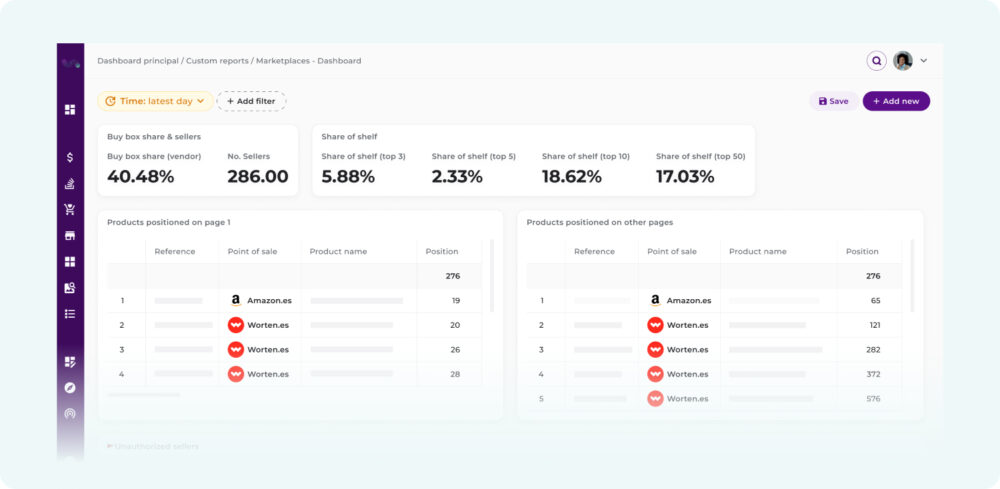
The Pricing & Seller Control module from flipflow is designed specifically to meet this need: to turn the price and seller ecosystem into a continuous governance system, by country and by channel. The results are concrete. In the case of Havaianas, implementing this model allowed for a 50% reduction in unauthorised sales, a 25% decrease in channel conflicts, and a 31% increase in DTC sales to marketplaces.
Conclusion — Real Control vs. The Illusion of Control
Every organisation selling on marketplaces and online retailers should ask themselves a key question: Do we have real visibility over who sells our products, under what conditions, and at what price in each channel and country?
If the answer depends on multiple sources, manual reviews, or delayed reports, control is more apparent than real.
Having an active price dashboard is useful. But if that dashboard only captures what has already happened, if it does not connect price with availability and the Buy Box, and if it does not distinguish between a one-off deviation and a structural channel dynamic, the visibility it offers is partial.
In 2026, digital governance requires answering four questions continuously and automatically: Who controls the Buy Box of strategic SKUs, whether active sellers are authorised, whether price policies are met, and whether there is stock consistency across channels and markets.
When those answers are available in real-time, management stops being reactive and becomes a channel control strategy. And that difference, in organisations with international scale, translates directly into protected margin, stabilised positioning, and a coherent distribution architecture.
Buy Box loss is rarely due to price alone. Usually, it is the visible symptom of a lack of governance. This is where platforms like Flipflow act as an intelligence layer capable of connecting price, stock, and visibility to transform scattered data into real digital channel control.
Want to see how the digital channel governance model works applied to your organisation? Discover flipflow’s Pricing & Seller Control module and request a personalised demo.