
Siri AI: How Apple Enters the New Era of Agentic Assistants
TL;DR
Apple has launched Siri AI, an assistant with agentic capabilities that can reason and execute tasks across applications. For brands, the impact goes beyond technology: product discovery is starting to migrate from active search to conversation with an assistant.
The Context of the Launch
On 8 June 2026, Apple took the stage at WWDC26 (Apple’s Worldwide Developers Conference) with an announcement that had been generating equal parts expectation and scepticism for months: the presentation of Siri AI, a completely rebuilt version of its virtual assistant. It is not an incremental update. Apple has redesigned Siri from the ground up to turn it into an agent capable of reasoning, acting and executing complex tasks across the device’s apps.
In the words of Craig Federighi, Senior Vice President of Software Engineering at Apple:
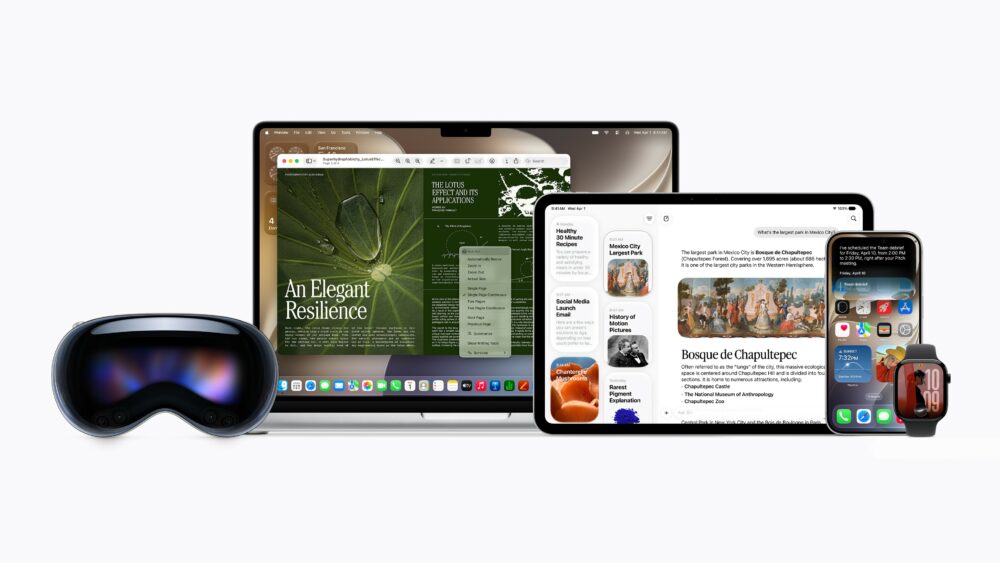
The move does not happen in a vacuum. OpenAI, Anthropic and Google have spent months pushing towards agentic tools capable of writing code, managing workflows and operating applications autonomously. Apple arrived late to that conversation, but arrives with a structural advantage that none of its competitors has. More than 2 billion active devices where Siri can be installed natively, without friction, and with direct access to the user’s most personal data.
Source: Apple introduces Siri AI – June 2026
The result is a product that does not compete solely on technical capabilities, but also on distribution. And when the entry channel is 2 billion active devices, that carries as much weight as any technical advantage.
What Makes Siri AI Different?
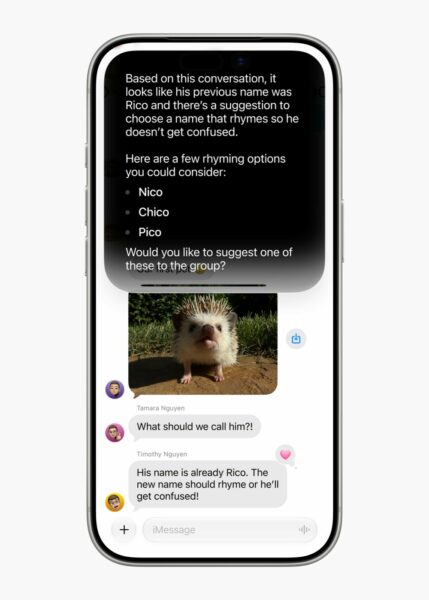
Siri AI incorporates 4 key capabilities that radically distinguish it from the traditional version:
- Understanding personal context: The assistant can remember important user information, such as preferences, conversation history and relevant data, to offer precise and personalised responses. This allows for more natural conversations where there is no need to constantly repeat information.
- On-screen awareness: Siri AI can detect and understand the content appearing on screen to perform specific actions. If someone sends you a message with their new location, the assistant can automatically open it in maps without you having to specify it. This feature transforms the user experience by eliminating intermediate steps.
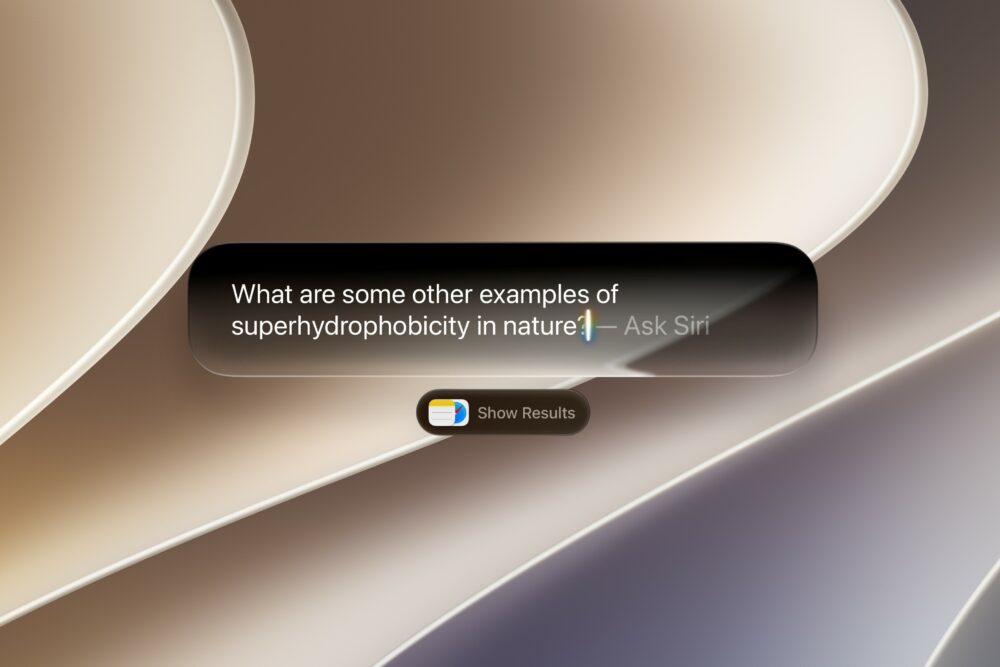
- Updated web queries: The assistant accesses up-to-date online information, allowing it to answer questions about recent facts, ongoing events or constantly changing data. This overcomes the limitation of AI models with static knowledge.
- Cross-application actions: Siri AI can execute tasks that require multiple applications, such as creating a calendar event, sending a confirmation message and adding a reference note. This capability is the core of its agentic approach, as the assistant does not just inform but executes.
Source: Apple introduces Siri AI – June 2026
Furthermore, Apple introduces a standalone Siri application with a chatbot-style interface, where users can retrieve previous conversations and maintain an organised history. It also includes assisted writing to generate personalised text and more natural voice options.
Beneath all this, there is a significant technological agreement. The language models that power Siri’s intelligence are built on Google’s Gemini technology. It is a personalised version co-developed with Apple that runs partially on Google Cloud servers with Nvidia GPUs. The Google brand does not appear anywhere in the interface, but its technology is what makes this qualitative leap possible.
The Privacy Model: Apple’s Differentiating Argument
One of the aspects Apple has insisted on most strongly in the presentation is the privacy architecture surrounding Siri AI. Request processing operates across three different layers depending on the complexity of the task:
- Simple requests (dictation, quick commands, basic searches) are resolved entirely on-device, without data leaving the user’s hardware.
- Moderately complex requests go to Apple’s Private Cloud Compute infrastructure. Here, information is processed ephemerally and discarded without storage, human access or use for model training.
- Only the most demanding tasks travel to Google Cloud servers. This is done under a contract that explicitly prohibits Google from using that data to train its own models.
Apple also stresses that external experts can verify these guarantees at any time. For a company competing in a market where user trust is a differentiating asset, that argument carries weight. Privacy is not just a technical feature here: it is part of the competitive positioning.

The European Situation: the DMA as a Critical Variable
The rollout of Siri AI will not be uniform globally. Apple has confirmed that the beta will arrive later this year, initially only in English, and that its availability will depend on the device and region.
In Spain and the rest of the European Union, the launch arrives with a significant limitation: Siri AI will not be available on iPhone or iPad with iOS 27. The reason is the conflict between Apple and the Digital Markets Act (DMA).
European regulations require Apple to allow third-party assistants access to the same level of operating system integration as Siri AI. For regulators, granting Siri privileged access to on-screen content without offering equivalent capabilities to the competition contravenes the spirit of the rule. Apple, for its part, maintains that such openness creates privacy and security risks.
The European Commission rejected Apple’s request for an 18-month exemption to adapt to the DMA, arguing that the rules do not provide for technological exceptions. Furthermore, it considers that the company has not made the necessary efforts to comply with the regulation.
The tension is not new. In 2024, Apple already delayed Apple Intelligence features in the EU before enabling them with regulatory adjustments. However, Siri AI poses a greater challenge: as it operates across the system, finding a solution that satisfies both regulators and Apple does not seem straightforward. For now, there is no launch date for iOS and iPadOS in Europe.
Mac, Apple Watch and Apple Vision Pro will receive Siri AI in the region. However, the block affects the platforms with Apple’s largest user base in Europe, significantly limiting the initial reach of the technology.
Implications for Retail and Brands
Beyond the regulatory debate, the launch of Siri AI has direct consequences for any brand or retailer operating in the digital environment. The reason is structural: the entry point for product discovery is changing.
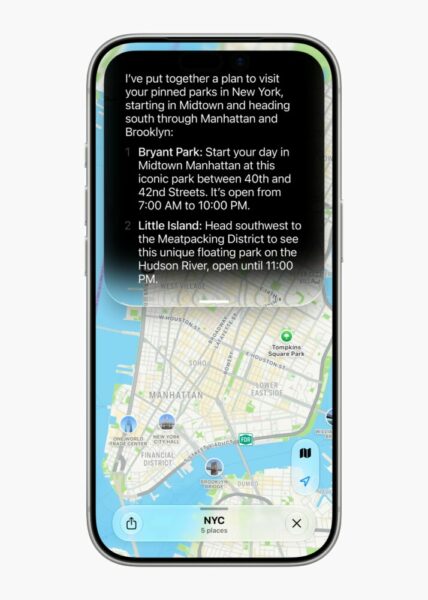
Until now, the typical process was linear: the consumer opened a search engine, typed their query, browsed results and accessed the product. With agentic assistants like Siri AI, that process can collapse into a single conversational interaction. The user does not search actively: they ask, and the assistant recommends. Apple also announced an agent integration with the App Store that will allow tasks such as booking or buying to be delegated without the user having to manually navigate through any interface.
Source: Apple introduces Siri AI – June 2026
The model’s recommendation mechanism is not neutral. According to Azoma’s analysis of how Gemini cites sources in a buying context, the weight is distributed approximately 41% to retailer listings, 37% to earned media, 15% to brand-owned sites and 7% to user-generated content. Whether a product appears recommended by Siri does not depend solely on good SEO. It depends on the quality of the product feed, presence in specialised media and the consistency of structured data across all platforms where the brand has a presence.
For Digital Shelf Analytics tools, this scenario expands the perimeter of what needs monitoring. A brand’s visibility in an agentic environment varies according to the user’s context, their history and the sources the model decides to prioritise for each query. The agentic AI market in retail and ecommerce is estimated at $60 billion in 2026, with projections to exceed $218 billion by 2031.
Market Reaction and Scepticism
The market response to Siri AI has been mixed. Investors have shown a lukewarm reaction to the announcement. There are doubts about whether the update is enough to close the AI gap with more established competitors.
Morgan Stanley has pointed out a major risk: Siri AI will be limited on older devices. According to the analysis, many iPhones in circulation do not have the processing power required to run advanced AI features, which will reduce the actual use of the assistant across much of Apple’s installed base.
Scepticism also stems from the fact that Apple has promised improvements to Siri since 2016, but actual implementations have been limited. The company arrives two years late to the generative AI race, and some experts question whether Siri AI is truly innovative or just an incremental adjustment.
Furthermore, the EU launch restriction reduces the product’s immediate impact in a key market. Without availability in Europe, Apple loses a substantial part of its potential user base, limiting global adoption and the validity of its competitive strategy.
Source: Apple introduces Siri AI – June 2026
What to Watch in the Coming Months
There are several key factors that must be monitored to assess the true impact of Siri AI over the coming months:
- Actual availability in the EU: It will be crucial to see if Apple manages to resolve the dispute with the European Commission and when (or if) Siri AI will reach iPhone and iPad in Europe. The lack of a DMA exemption could mean an indefinite delay.
- User adoption: The fundamental metric will be how many users activate and use Siri AI regularly, especially on compatible devices. The hardware limitation of older devices could be a decisive factor.
- Integration with third-party apps: Apple has planned to open Siri to AI apps like ChatGPT and Gemini, which could amplify the assistant’s utility. The implementation of this integration will be key to adoption.
For the retail sector and brands, there are several fronts to follow. How the agentic integration with the App Store evolves and what friction it removes in the buying process. How retailers adapt their product feeds and their earned media strategy to appear in the results of an assistant that does not return lists of ten results, but a specific recommendation. And, from the competitive intelligence side, what tools allow monitoring that visibility in an environment where the same product may receive different treatment according to the profile of the user asking.
Siri AI represents Apple’s most ambitious attempt to date in generative AI, but the company still must prove it can compete effectively in a market where it already has established competitors. The combination of privacy, personal context and agentic actions is promising, but limited availability and hardware restrictions may slow its mass adoption. We will be watching closely.