
World Cup 2026 as a Testing Ground for In-Store Retail Media
TL;DR
Best Buy and other chains are using their physical stores as advertising media during the 2026 World Cup, investing in connected screens and brand activations that go beyond consumer electronics. The tournament acts as a catalyst because its direct impact on traditional ad spend is diluting, pushing budgets towards In-Store Retail Media.
The 2026 World Cup will drive an additional $10.5 billion in the global advertising market, according to forecasts from WARC Media. This is a considerable figure, but also a sign that the tournament’s direct impact on traditional media spend is moderating: in 2018, the Russia World Cup generated a proportionally greater boost than what is expected now.
This seemingly negative data is exactly what makes In-Store Retail Media the star of this edition. While audiences fragment across linear TV, social media, and streaming, chains like Best Buy, Walmart, and Home Depot are using their own stores as advertising media, with the World Cup as the reference event to test how far the physical format can go.
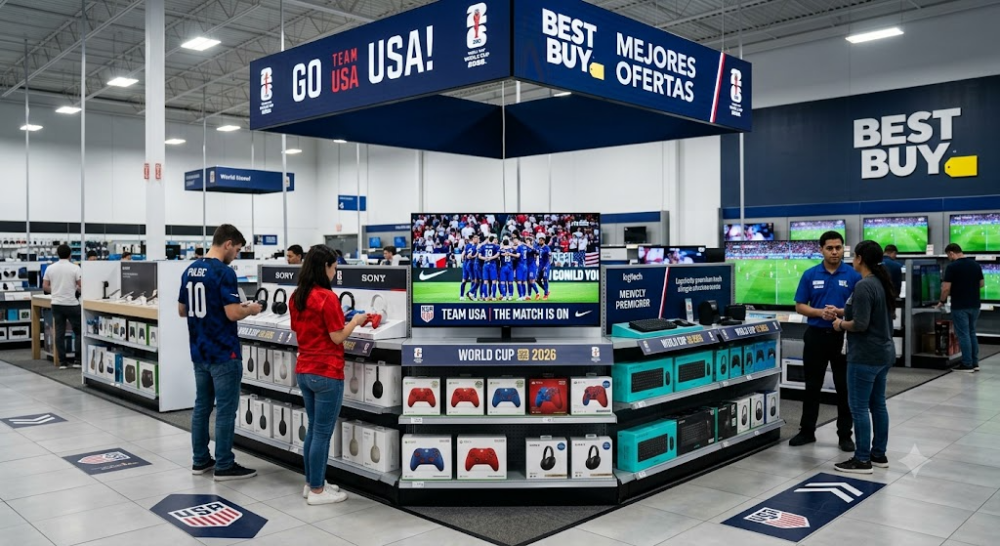
Illustrative image generated with AI; does not represent a real store or activation.
The Best Buy Experiment: When the Store Becomes an Advertising Canvas
Best Buy launched its Retail Media network, Best Buy Ads, in 2022. Since then, it has connected 93% of its transactional revenue to a customer ID, creating a solid foundation for offering targeted advertising both online and in-store.
The company has a considerable physical footprint: more than 1,000 stores in the United States, each with multiple natural advertising surfaces. Shop windows, TV screens, PC monitors, TV walls, and checkout points form an inventory that brands can segment by geography, choosing the intensity of each campaign activation and booking through integrated packages.
This openness has attracted categories that have nothing to do with consumer electronics because the Best Buy shopper profile combines parents, sports fans, gamers, and media consumers in the same physical space.
“Takeover packages”: what they are and why they are sold out
The takeover packages are advertising products that allow a brand to take visual control of multiple spaces within a store during a specific period. According to Lisa Valentino, president of Best Buy Ads, these packages are almost sold out for all of 2026, with brands like IKEA, Meta, ESPN, and Hisense activating campaigns linked to the World Cup.
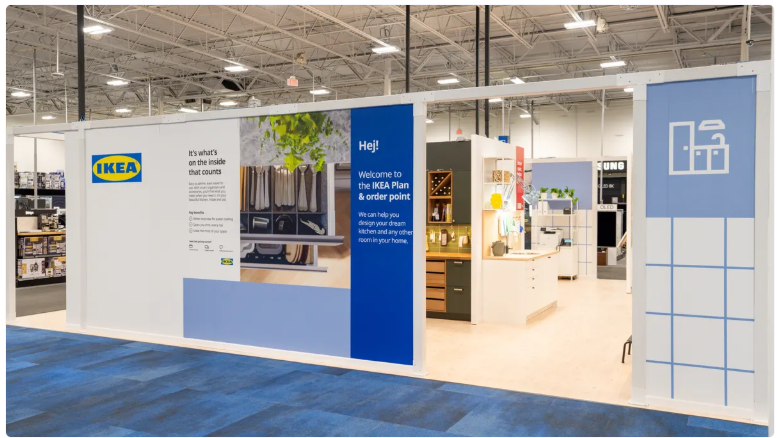
Source: Best Buy debuts consultation spaces within Ikea stores – Retail Dive – May 2026
The demand responds to several factors. First, the shopper profile of Best Buy: buyers at this chain are 26% more likely than the general population to be sports fans, which fits with activations linked to the NFL, TGL, and now the FIFA World Cup.
Second, storytelling capability. Takeover packages allow brands to build coherent narratives that guide the customer from outside the store to the point of purchase, creating an immersive experience difficult to replicate on other channels. IKEA, for example, uses these spaces to offer kitchen and bathroom planning experiences directly in-store.
Third, scarcity generates urgency. With limited inventory and growing demand, brands seek to secure spaces well in advance, especially during high-traffic events like the World Cup.
Screens that “Talk to Each Other”: The Technological Bet
Best Buy is investing in technological infrastructure for 2026 that will allow for something more sophisticated than simple rotation of creatives. The company is testing interconnected screens capable of communicating with each other to send sequential messages based on the customer’s journey through the store.
Imagine this scenario: a customer enters Best Buy and sees a message in the exterior window. As they move towards the TV area, they receive a second related message. In the checkout area, a third message closes the narrative. This sequence allows for the construction of more elaborate stories and measuring how customers progress through different touchpoints.
The technology is in the implementation phase during 2026, with results expected in a 12 to 18-month horizon. This investment responds to a market need: advertisers are looking for formats that combine the impact of traditional OOH with the targeting and measurement capabilities of digital. Connected in-store screens offer exactly that, provided a measurable ROI is demonstrated.
Why the World Cup is the Perfect Catalyst
Major sporting events offer ideal conditions for testing new Retail Media capabilities. The 2026 World Cup presents characteristics that make it especially attractive:
- Extended duration: Unlike a playoff match or a one-day event, a World Cup unfolds over weeks. This allows brands to maintain sustained activations, collect enough data for robust analysis, and adjust messages based on real-time results.
- Massive and engaged audience: Football mobilises hundreds of millions of viewers globally. In the United States, interest grows edition after edition, and retailers like Best Buy benefit from a significant overlap between their customer base and sports fans.
- Creative flexibility: Retailers can adapt messages based on results of matches, qualifiers, or cultural moments linked to the tournament. Regional supermarkets like Hy-Vee or chains under Ahold Delhaize have demonstrated their ability to adjust creatives based on sporting results, an agility that brands value.
- Demonstration of full-funnel capability: Retail Media was born as a lower-funnel channel, oriented towards direct conversion. The World Cup allows networks to demonstrate that they can generate awareness, discovery, and consideration, in addition to sales.
Walmart Connect, for example, has activated spaces with Coca-Cola in 11 car parks of World Cup host cities. Sam’s Club Member Access Platform has prepared activations in match locations. And The Home Depot has partnered with the football-specialised media network Men in Blazers Media Network to carry out a touring campaign in which both brands will produce World Cup-related content. Each seeks to position their physical inventory as an integral part of the tournament’s advertising ecosystem.
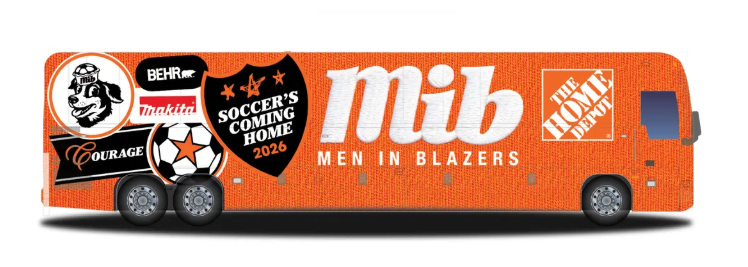
Source: How Home Depot is crafting content on the road to the World Cup – Marketing Dive – May 2026
The Pending Challenge: Measuring and Governing Physical Inventory
Despite the enthusiasm, In-Store Retail Media faces structural challenges that the sector must resolve to consolidate:
- Fragmented measurement: Lisa Valentino summarises it clearly: “we have to solve measurement“. For endemic brands (those that sell products in Best Buy), direct attribution to sales is relatively simple. For non-endemic brands (such as Meta or ESPN), impact is measured in brand lift, consideration, or awareness, metrics that require different methodologies.
- Inventory governance: Physical stores have operational limitations that digital does not face: opening hours, installation restrictions, local regulations, staff availability. Coordinating activations across hundreds of stores requires standardised processes and well-defined time windows.
- Scalability: eMarketer describes In-Store Retail Media as a “sleeping giant” that will exceed $1 billion in 2029, but growth depends on medium and small retailers being able to offer standardised and measurable inventory.
- Competition for attention: In an environment with an additional $10.5 billion in ad spend, the noise is considerable. In-store activations must differentiate themselves creatively to capture genuine attention, not just physical presence.
Key Factors for the Future of In-Store Retail Media
The 2026 World Cup has not invented In-Store Retail Media, but it is subjecting it to a test of scale that forces it to be taken seriously: real technological investment, brand activations outside their usual category, and an explicit interest from retailers, agencies, and platforms to demonstrate that the format works beyond the one-off event.

The key question is whether brands will maintain investment in In-Store Retail Media after the World Cup. If the results demonstrate measurable ROI, the channel could consolidate as a structural component of the advertising mix. If not, it risks being relegated to tactical activations during specific events.
The coming months, especially Q3 and Q4 of 2026, will offer enough data to evaluate whether the experiment by Best Buy and its competitors marks a turning point or represents a temporary spike. Meanwhile, In-Store Retail Media is waking from its slumber and claiming its place in the modern advertising ecosystem.